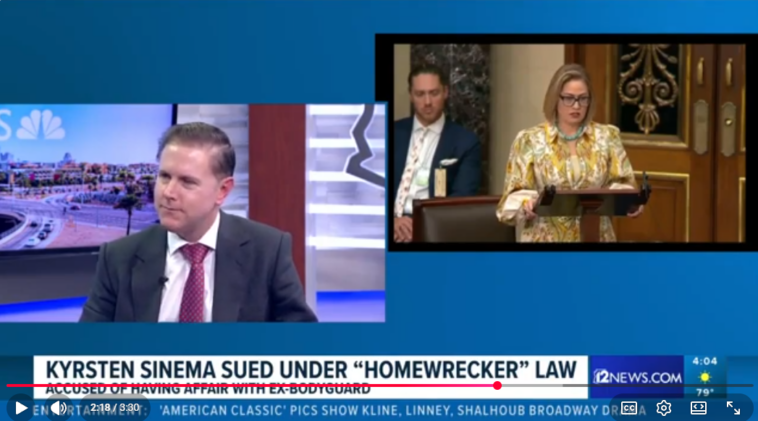

The Enduring Legacy of North Carolina’s “Homewrecker” Law
The case against former U.S. Senator Kyrsten Sinema has stirred up a considerable amount of attention, largely because it revives a law that many thought belonged in the history books. North Carolina’s alienation of affection statute, frequently labeled as the “homewrecker” law, has a fascinating past rooted in English common law. Over time, many jurisdictions have dismissed this type of legislation, yet North Carolina remains committed to its enforcement. In this opinion editorial, we take a closer look at the origins, implications, and enduring relevance of this law, as well as the broader tangled issues it raises in the modern legal landscape.
While some may view the law as outdated, it tells an important story about societal values from centuries past. In earlier times, marriage was more than a mere personal relationship; it represented an alliance of families, social standing, and property rights. Today, however, such claims often seem to belong to a bygone era. Yet, for those living in North Carolina, the law remains a key tool for addressing what some consider interference in marital relations.
Revisiting the Historical Context: How Marriage and Law Were Intertwined
To understand the full importance and super important role this law still plays, one must dig into its history. The law’s roots go back to the era of English common law when marriage was a contract with far-reaching social and economic implications. It wasn’t just about love; it was about alliances between families and the securing of property rights.
This historical backdrop forms the basis for the contemporary legal framework in North Carolina. The law is seen by some as a protective measure that seeks to safeguard the sanctity of marital bonds, even if it appears increasingly off-putting for modern sensibilities. Critics argue that it punishes third parties for actions they may not have intended to trigger legal consequences. Nevertheless, supporters contend that it addresses the tricky parts of interpersonal relationships where infidelity or interference disrupts what was once a well-ordered social construct.
It is important to note that while the law may seem intimidating or even nerve-racking for those unfamiliar with its nuances, it has been used in North Carolina for decades. This deep-seated legal tradition provides the historical context for its continued relevance today.
Understanding the Alienation of Affection Claim Against a Public Figure
Perhaps one of the most eye-catching aspects of the current case is the fact that it involves a high-profile defendant. When a well-known public figure like Kyrsten Sinema is thrust into a lawsuit under this statute, it compels us to confront the tangled issues that arise when personal relationships intersect with public life.
Although the headline-grabbing nature of the claim has contributed to widespread public scrutiny, it is crucial to understand that such lawsuits have a longstanding precedent in North Carolina. In these cases, the aggrieved party, usually a spouse, alleges that a third party has played a significant role in causing the breakdown of their marriage. Despite the media focus on Sinema’s public persona, legal experts like Josh Kolsrud emphasize that this type of lawsuit is not uniquely rare in the state.
When analyzing the claim, legal professionals point to the fine points of the statute. It is not an indictment of modern societal values, but rather a legal mechanism to address what a party perceives as interference in marital harmony. Moreover, while the lawsuit may look unusually dramatic given the involvement of a public figure, the defending attorney’s perspective remains anchored in standard legal practices that have been applied in similar civil disputes for decades.
Shifting the Venue: From State to Federal Court and Monetary Thresholds
An intriguing twist in the current legal proceeding is the movement of the case from state to federal court. Initially framed within the parameters of state law, the lawsuit met the minimum financial threshold that necessitated a shift to the federal judicial system. Originally starting at claims around $25,000, the amount now reportedly nears $75,000. This shift is significant because it raises the stakes and introduces federal procedural rules into what might otherwise have been a straightforward state-level claim.
The transfer of the case illustrates the complicated pieces involved when monetary claims escalate. As evidence surfaces and both sides present their arguments, the damage estimates can balloon further, often depending on multiple tangible factors. Whether a dollar sign attached to a claim may become a critical factor in influencing a jury’s perception or adjusting negotiation dynamics remains a point of heated discussion among legal scholars and practitioners alike.
The movement to federal court also introduces another layer of legal challenges. Federal courts are generally seen as arenas that demand meticulous attention to procedural details—a fact that can intensify the already nerve-racking process for defendants and their attorneys. Thus, shifting the venue is not merely a procedural formality but a transformation that impacts the entire legal strategy related to the case.
Legal and Social Implications: Beyond the Courtroom
This case sparks a broader conversation about the role that traditional legal principles play in an evolving society. At the core of the debate is a question that resonates well beyond the realm of criminal defense: How does one balance historical legal constructs with contemporary social norms?
On one hand, laws like North Carolina’s homewrecker statute serve as relics of a framework where personal relationships were explicitly regulated by legal statutes. On the other, modern societal values tend to view marriage as a deeply personal matter rather than a commercial or purely social transaction. This dichotomy has fueled considerable public debate, with proponents on both sides presenting compelling arguments.
Critics of the statute argue that enforcing such laws feels similarly off-putting to coercive or punitive legal measures from a less enlightened past. They contend that by penalizing third parties, the law might inadvertently create an environment of blame that complicates rather than resolves interpersonal disputes. Advocates, however, maintain that the law is a necessary instrument for compensating marital betrayal and preserving the family unit by holding interfering parties accountable.
Within the context of a public figure’s involvement in such a case, the dynamics become even more tangled. The participation of a high-profile defendant in what many see as an old-fashioned legal claim underscores tensions between a personal life in the public eye and the legacy of an archaic legal norm. This duality reveals the subtle details that exist between respecting individual privacy and recognizing the potential need for redress when one feels wronged.
There is also the issue of whether such lawsuits, which often hinge on often subjective interpretations of emotional harm, should continue to be a part of modern legal systems. This is one of the subtle parts that legal theorists and practitioners must wrestle with—a legal dilemma that remains one of the most debated topics in domestic civil litigation.
Arguments For and Against the Enforcement of Alienation of Affection Laws
The debate over North Carolina’s enforcement of the alienation of affection law is full of problematic points and is loaded with social, legal, and emotional considerations. Here, we break down some of the primary arguments on both sides:
- Support for the Law:
- Historically grounded in English common law, the statute has deep roots in the tradition of preserving marital integrity.
- It offers a legal remedy for spouses who believe that a third party’s actions have substantially harmed their marriage.
- Advocates argue that the law acts as a deterrent, discouraging individuals from interfering in established marital relationships.
- Criticism of the Law:
- Many argue that the law is outdated and does not reflect current societal norms where personal choices are valued over historic social contracts.
- It is seen as imposing a moral judgment on private relationships, which can lead to overreaching legal consequences.
- Critics also suggest that the law may be used selectively, potentially targeting high-profile individuals as a means to gain media attention rather than serve justice.
These bullet points encapsulate the nerve-racking debate surrounding the enforcement of such a statute. They prompt a larger reflection on whether the obligation to respect historical legal traditions should override evolving social understandings of personal autonomy and privacy.
Evaluating Damages: The Ripple Effect of Monetary Claims
When a lawsuit traverses from state courts into the federal system, the potential financial stakes become a critical piece of the puzzle. With claim amounts now reported to range from $25,000 to an astonishing $75,000, the financial dimension of such cases starts to take on super important significance.
Legal experts assert that the actual award in cases involving alienation of affection can grow much higher depending on what evidence is produced. In many instances, the ultimate compensation not only reflects the emotional trauma claimed by the aggrieved party but also serves as a punitive mechanism aimed at the third party involved.
This opens up several key questions:
| Aspect | Considerations |
|---|---|
| Initial Claim | Claims typically begin at a base monetary amount, for instance, $25,000. |
| Potential Escalation | As evidence comes to light, and if a jury finds the interference significant, the damages can balloon, reaching or even surpassing $75,000. |
| Impact on Defendant | The defendant may face not only monetary penalties but also potential reputational damage, an additional cost in cases involving public figures. |
These financial repercussions can often be intimidating for defendants and even off-putting for legal teams attempting to find their way through the maze of complicated pieces involved in such lawsuits. They underscore not just the personal costs at stake but also the broader economic implications for civil litigation in similar cases.
Media Coverage and Public Perception: The Role of Publicity in Legal Disputes
Another notable twist in this case is the intense media interest due to the involvement of a high-profile figure. The presence of a well-known defendant in what might otherwise have been a routine alienation of affection case has inevitably led the media to play up the dramatic elements of the story.
This infusion of celebrity into an age-old legal dispute brings forth several subtle details regarding public opinion and legal strategy. Defendants in such cases typically opt for a quiet legal response before engaging with the public narrative. This is because public statements can potentially complicate the formal legal proceedings that are already loaded with tension.
The current silence from Sinema is not surprising. Historically, a measured response is often preferred until it becomes absolutely necessary to file a formal answer in court. This strategy, while nerve-racking to observe from the outside, is a calculated part of dealing with the tangled issues that high-stakes litigation presents.
Media coverage tends to amplify certain aspects of a case at the expense of others, sometimes simplifying the legal arguments into themes that are easier for the public to digest. As a result, the fine points of North Carolina’s alienation of affection law can be overshadowed by broader narratives about scandal and personal betrayal. For those who watch closely, however, unraveling these subtle details offers a richer understanding of the legal and cultural nuances at work.
Implications for Legal Representation in High-Stakes Civil Lawsuits
The current lawsuit underscores the super important need for robust legal representation. When facing a case laden with historical legacy, complicated twists and turns, and potentially high financial stakes, the importance of an experienced attorney cannot be overstated.
Seasoned professionals such as Josh Kolsrud bring a depth of expertise accumulated from years of prosecuting major crimes and fighting in both state and federal courts. His experience proves key in managing your way through both the overt challenges of the case and the less apparent, subtle parts that often decide the jury’s leanings.
For those entangled in cases involving alienation of affection claims, several super important points emerge regarding legal representation:
- Experience: Attorneys with a background in both state and federal law are better positioned to steer through the tricky parts of the legal process.
- Dedication: A lawyer committed to providing each client with significant attention is invaluable when handling cases full of problems and loaded with intense public scrutiny.
- Strategic Communication: Especially in cases involving public figures, the ability to control public narrative while rigorously defending a client’s rights often makes the difference between success and failure in court.
Clients navigating these dangerous legal waters benefit from having an attorney who knows both the letter of the law and the practical, on-the-ground twists and turns of courtroom dynamics. It is clear that when the stakes are high—financially, professionally, and personally—securing proper legal counsel is not just advisable but absolutely essential.
The Broader Social Debate: Modernity vs. Tradition in Marriage Laws
The revival of the alienation of affection claim in modern legal disputes taps into a larger conversation about the evolving nature of marriage, fidelity, and individual rights versus traditional communal values. In a time when personal freedom and autonomy are highly prized, claims based on historical social contracts can seem both archaic and out of touch with contemporary realities.
Supporters of the law argue that its continued application is necessary to promote accountability in marital relationships, serving as a deterrent against those who would otherwise interfere without consequence. In contrast, critics contend that enforcing such statutes is like trying to apply outdated social standards to a modern society that values personal freedom and the separation of private life from public regulation.
This clash of viewpoints is emblematic of a broader cultural debate: are we willing to cling to traditions that once served a purpose, or should we recalibrate our legal frameworks to reflect the nuanced understandings of personal relationships seen today? The answer is far from simple, as it involves thoughtful consideration of both historical context and the increasingly diverse nature of modern relationships.
Moreover, as society increasingly relies on digital communication and public exposure through social media, cases like these often take on a whole new dimension. They force us to consider if the lines between public and private are blurring to such an extent that even age-old laws must adapt to remain relevant in an era defined by rapid technological advances and shifting societal expectations.
Legal Precedents and Modern Courtroom Dynamics
Looking back at previous cases that have invoked the alienation of affection law provides important insights into how these cases typically unfold. Though each case involves its own set of confusing bits and challenging circumstances, there are common threads that can be identified in modern courtroom dynamics.
For instance, legal precedent shows that verdicts in similar cases often hinge on the evidence presented regarding the emotional and financial damage caused by the alleged interference. Cases have demonstrated that while the monetary award is super important for the aggrieved party, the emotional costs associated may sometimes be even more compelling to a jury.
Some of the key factors that courts often consider include:
- The history and nature of the marital relationship
- The specifics of the alleged interference
- The credibility of testimonies provided by both parties
- Any relevant documentation that supports or refutes the claim
Understanding these aspects helps illuminate how a case against a public figure, regardless of his or her notoriety, is ultimately decided on the basis of evidence and the application of longstanding legal principles. These examples highlight that, beneath the sensational headlines, the outcome is determined by reviewing every little twist of the facts and employing a balanced approach to justice.
Looking Ahead: The Future of Alienation of Affection Laws in Modern Jurisdictions
As discussions about this case persist and similar claims continue to surface, the question of whether North Carolina’s alienation of affection law should be reformed or even abolished is becoming increasingly relevant. The law remains a peculiar but enduring artifact of a past era, and its future is a subject of active debate among lawmakers, legal practitioners, and the general public.
Future legal challenges may push for either more stringent enforcement or, conversely, for legislative reforms that bring the law more in line with modern understandings of marriage and individual rights. The ongoing dialogue reflects a society grappling with balancing tradition and modernity—a scenario that is as full of problems as it is illustrative of evolving cultural attitudes.
Those who advocate for change argue that legal systems need to adjust to reflect the current social climate. They suggest that it might be time for North Carolina—and perhaps other states with similar statutes—to reexamine such laws in light of contemporary values. Critics of the statute, on the other hand, warn against a wholesale dismissal of legal traditions that, despite their age, continue to serve a role for many.
This evolving debate will likely continue to provoke heated discussions in legal circles, academic forums, and even around dinner tables across the nation, as the balance between maintaining heritage laws and embracing modern legal interpretations remains on a knife-edge.
Conclusion: Balancing Tradition, Legal Rigor, and Evolving Social Norms
The case against Kyrsten Sinema under North Carolina’s alienation of affection law is a vivid reminder of how legal traditions adapt—or resist adapting—to the realities of modern life. From its roots in the detailed yet tangled history of English common law to its current application in a high-stakes, publicized lawsuit, this statute embodies both the resilience and the challenges of enforcing an old law in a new era.
This opinion editorial has taken a closer look at the various super important aspects of the law, including its historical background, the financial and procedural twists and turns involved in modern litigation, and the broader cultural debate about the place of traditional marital laws in a society that values individual freedom. While it remains true that such cases can present overwhelming challenges for those involved, they also offer a unique window into the evolution of legal norms and family law in America.
For legal professionals, public figures, and ordinary citizens alike, the lessons from this case are manifold. It highlights the need for experienced legal guidance when facing claims that are both financially and emotionally laden. Moreover, it serves as a reminder that while society may change, certain legal relics continue to provoke intense debate, urging us all to consider the fine points of justice, responsibility, and personal freedom.
In conclusion, the ongoing enforcement of the alienation of affection law in North Carolina is a subject that is as intriguing as it is contentious. Whether one views it as an essential legal reminder of past social contracts or as an outdated relic of a different era, its impact on the lives of individuals involved is undeniable. As legal debates continue and as society’s values shift, only time will tell how such laws will be remembered—or reinvented—in the annals of legal history.
Ultimately, navigating these tricky parts of legal tradition requires not just a keen knowledge of statutory law, but also an appreciation of the small distinctions that set historical precedent apart from modern expectations. The case against Kyrsten Sinema thus becomes a focal point for discussions about the proper role of traditional law in our rapidly evolving society, urging legal experts and policymakers to find a path forward that respects the past while acknowledging the present.
Read more about this topic at https://kolsrudlawoffices.com/kyrsten-sinema-homewrecker-lawsuit/
Related articles you might like
These homewrecker laws let you sue the person who …
All About the “Homewrecker Law” That a Former Senator Is …